Compare Top Crypto Portfolio Trackers

Crypto investing begins with a sense of hope and aspiration – yet newcomers learn the hard way that enthusiasm does not translate to profitability. Between having to manage several exchanges, several wallets, and unpredictable markets, novices lose focus on what generates returns faster than anyone can process. Balancing is confused, and interpreting profits is next to not a given.
By 2025, the eruption of new tokens, staking choices, and DeFi protocols has rendered managing a crypto portfolio trickier than ever. Churned between informal and systematic investors is a growing chasm, not due to timing in the markets, but due to data precision and discipline.
This piece investigates the most common errors newcomers have making with their portfolios for cryptocurrencies – and how to correct them with best practices and contemporary technologies.
Introduction: Why Beginners Still Struggle With Crypto Portfolios
The digital assets world can seem ridiculously simple at first. Numerous investors think that if they purchase a handful of coins and prices move up, they’ve already “made money.” But portfolio management in cryptos is anything more than verifying balance changes – it’s seeing the performance, basis cost, and risk exposure.
The myth of “low-effort” investing and why a majority of rookies lose sight of ROI
The cryptosphere pays dividends in short bursts and hot memes, imparting the illusion that successful trading is based on gut instead of framework. Young traders will typically use screenshots, balance on exchanges, or advice from influencers to assess performance. Without accurate ROI (Return on Investment) tracking, they become severely offbase with their guesses.
What appears as profit on the screen can potentially be a net loss due to the fact that they have paid fees, spread, and entry price.
How early blunders in portfolio construction bleed value throughout life
Poor record-keeping may not sound catastrophic initially, yet the issue spirals quickly. When you can’t even figure out how much a particular trade cost or a certain token underperformed, future choices are based on guesses. New investors skipping systematic keeping find themselves too exposed to highly volatile assets or panic-selling during declines.
Inconsistent data today will confuse tomorrow – particularly at tax time or at times when strategies must be rebalanced.
Why good tracking tools are essential to learning correct portfolio discipline
Accurate tools not only computerize mathematics – they instruct form. By employing dashboards that delineate between realized and unrealized gains and emphasize cost basis per trade, investors become enlightened.
This is not outsourcing thinking, this is friction reduction. The correct system allows newbies to see why their portfolio is increasing or decreasing, not merely that.
Common Beginner Mistakes in Crypto Portfolio Management
All investors have a starting point, and errors are a learning process. Nevertheless, some blunders are common enough that they’ve become tendencies in almost every new crypto portfolio. They not only impact short-term gains – they form tendencies that can misconstrue an investor’s overall way of going about following and making choices.
Baffling balance growth with actual profit growth (ROI vs. PnL)
An old-time beginner blunder is taking a higher amount as proof of profit. Portfolio totals appear larger when coin prices increase, but ROI (Return on Investment) and PnL (Profit and Loss) reflect something more profound: how much value was truly lost or gained, with entry cost, fees, and realized gains taken into consideration.
For example, if an investor had acquired Bitcoin at $50,000 and then sank to $48,000 prior to rising to $49,000, their “account” would seem stable – yet their ROI is negative until surpassing the original buy-in.
Overlooking diversification beyond platforms and coins
Newcomers frequently overinvest in a single or double hot asset. When they fall, the whole portfolio declines too. A robust portfolio diversifies exposure – within giant caps, altcoins, and stablecoins too – to amount to risk.
Also crucial is diversification across platforms: holding assets in several exchanges or wallets stops a full loss due to hacks or spikes in withdrawal freezes.
Inter-mixing exchanges and wallets without keeping trail cost basis
Numerous investors have many pockets – hot, cold, custodian – and lose track of what each coin was ever paid for. This “cost basis” is the foundation of every ROI or PnL report. Without it, profits and losses become a grey area and can’t be accurately reported.
Up-to-date tracking software will automatically reconcile and synchronize cost basis, but newbies staying with screenshots or CSV files lose data accuracy in weeks.
Overrelying on manual spreadsheets or free programs
Spreadsheets make you feel organized, but they fall apart quickly when DeFi, token staking, or token swapping is introduced. Even free tracking apps can be missing the double-count protection or automation.
Greenhorns holding on to manual work will spend more time correcting formulas than interpreting results. Automation doesn’t take control away – it just eliminates human error in rapid markets.
Failure to capture fees and transaction information
Trading commissions, bridging fees, and gas payments creep up slowly and erode profits. Most newbies ignore them thinking they are infinitesimal. Gradually, unmonitored fees can skew true profit by a handful of percentage points.
Clever dashboards computerize these deductions automatically, provided that exchanges and wallets are correctly linked.
Neglecting security when joining wallets
Portfolio exposure shouldn’t be a sacrifice for security. Novices at times provide full-open API keys or link wallets with unfamiliar trackers without testing security measures. This can lead to exposure of secret information or even allow unauthorized trades.
Reliable platforms employ read-only API permissions and local encryption to secure investors’ information. Always verify what type of permission a tool is asking for prior to linking accounts.
Using instruments that are not compatible with investment objectives
Not all the apps are suitable for every kind of user. A beginner conserving funds in Bitcoin requires a different set of metrics than a frequent user executing arbitrage trades. Most waste time pursuing “feature-rich” applications rather than emphasizing the ones that are compatible with their true behaviors and objectives.
A dashboard selection begins with a single question: what choices will that data inform me about?
| Common Mistakes | Real-World Effect | How to Prevent It |
| Confusing ROI with balance growth | Misestimated profits and improper timing in trades | Utilize programs that discriminate between actual and unreal gains |
| Bad diversification | Big drawdowns whenever a coin falls | Allocate assets among categories and wallets |
| Overlooking cost basis | Inaccurate long-run ROI | Use automated cost tracking tools |
| Manual spreadsheets | Data errors and lost time | Select automated reconciliation dashboards |
| Missing fee detection | Overestimated profits | Utilize software that auto-logs trades and gas fees |
| Poor security practices | Risk of wallet compromise | Grant read-only API access only |
| Wrong tool choice | Data overload or missing metrics | Match app characteristics with personal strategy |
These mistakes accumulate fast – but identifying them early can assist investors in creating healthy behaviors and getting the best value for money right from day one.
1. CoinDataFlow
https://coindataflow.com/en/portfolio-tracker
When novices are searching for a means to monitor crypto assets without getting lost in a sea of complexity, CoinDataFlow quickly becomes their first serious option. It fills the middle ground between minimalistic trackers and expert analytics platforms – providing simplicity without the intimidating technical clutter of institutional software.
How it assists novices in evading critical errors
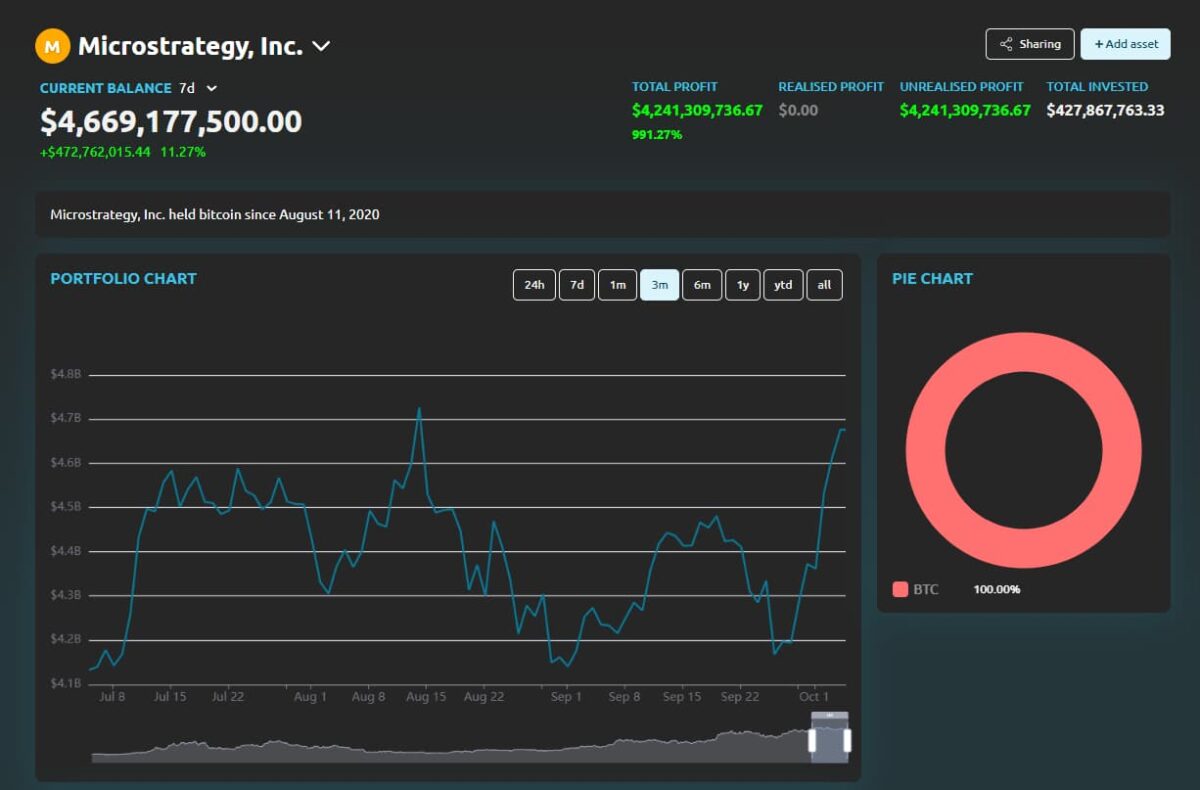
CoinDataFlow’s design aesthetic is based on simplicity and precision. The platform automatically identifies unrealized and realized gains, enabling users to see a true picture of their portfolio rather than just the balance amount.
For beginners, that means less confusion – no more mistaking short-lived price spikes for real profits.
Another common blunder new investors make is forgetting about the fine details of their transactions. CoinDataFlow’s automated import from exchanges and wallets keeps each entry – trade, transfer, or staking reward – perfectly up to date. Every transaction receives a cost basis, so investors always know exactly how much they paid and what they truly earned.
Actual ROI/PnL tracking and cost-basis correctness
CoinDataFlow computes ROI and PnL in real-time by pulling information directly from connected wallets, exchanges, and DeFi protocols. The app automatically reconciles trades, conversions, and fees, producing clean, transparent summaries that require no manual editing.
Even in fast-moving markets, the platform’s synchronization engine ensures that metrics remain up-to-the-second accurate, allowing users to see the latest snapshot of their performance.
For investors who previously depended on spreadsheets, the difference is dramatic — no more juggling tabs or fixing formulas. They can simply open one unified dashboard and track their progress without worrying about missing or duplicated entries.
Pros: transparency, clean dashboards, accurate historical sync
CoinDataFlow’s interface strikes a strong balance between accessibility and depth. The layout stays simple — charts and ROI visuals are clear, color-coded, and logically structured. Each asset view includes purchase history, holding period, and performance shown in both percentage and absolute terms.
The historical sync feature gives meaningful insight into long-term trends, showing how portfolio composition has evolved over months. This helps investors analyze their strategy rather than just react to daily price changes.
Another major advantage is data transparency. Unlike many platforms that hide their pricing sources, CoinDataFlow clearly lists every exchange and data feed contributing to its analytics, helping users verify results and build trust in the numbers.
Cons: less automation for active traders
While CoinDataFlow offers outstanding precision, it currently lacks active trading automation — such as rebalancing bots or auto-trade execution. For beginners, that’s actually an advantage, as it minimizes impulsive actions or overtrading.
However, advanced users who seek strategy automation or direct trade management will likely pair CoinDataFlow with another execution platform.
| Feature | Benefit for Beginners | Limitations |
| ROI/PnL automation | Automatically calculates accurate profits and losses | None significant for tracking purposes |
| Cost-basis tracking | Keeps entry prices and fees visible | Occasional manual corrections may be needed |
| Historical sync | Full view of past performance | Slower updates for smaller exchanges |
| Data transparency | Clearly lists data sources | Lacks direct trading automation |
| Interface design | Simple and intuitive for new users | May feel too basic for professionals |
CoinDataFlow succeeds because it avoids the “too much, too soon” problem. It provides beginners with the structure and reliability they need to truly understand their performance — while staying clean, intuitive, and easy to use.
2. DropsTab
https://dropstab.com/portfolio
DropsTab is targeted at beginners who want their portfolio monitoring to feel visual, straightforward, and fast. Built around colorful dashboards and an easy setup, it’s made to get users started without reading documentation or watching tutorials. The service markets itself as a “lightweight companion” for those who want quick insight rather than deep financial analysis.
Why newbies enjoy it: visual dashboards and simplicity
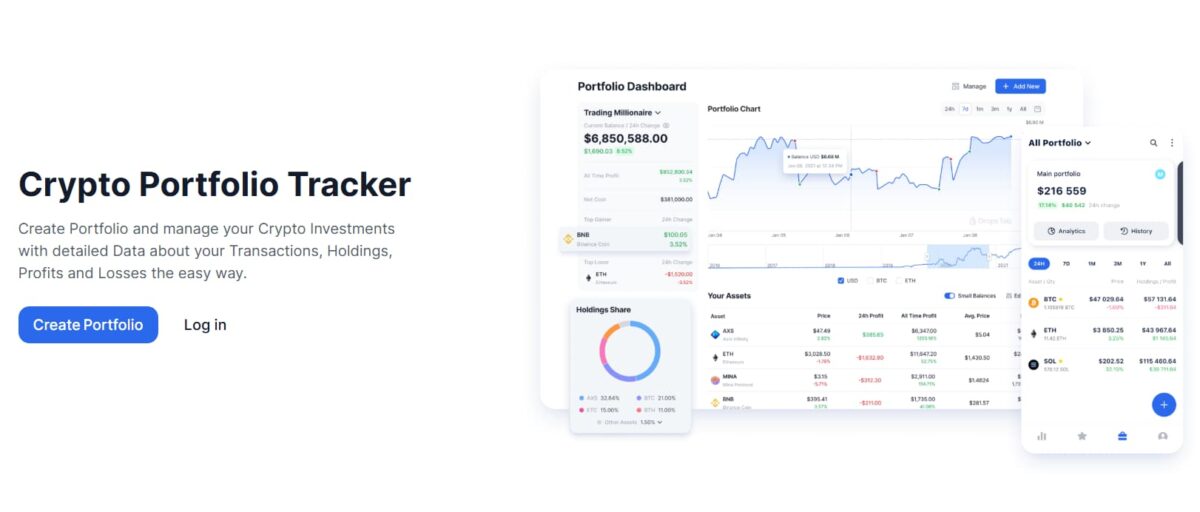
DropsTab’s interface is visually focused — featuring balance circles, asset breakdowns, and animated ROI charts. For a first-time crypto investor, these visual cues make portfolio tracking feel intuitive and even enjoyable.
Users can connect exchanges or wallets through standard read-only APIs, and the app starts generating overview charts instantly. For anyone moving from screenshots or manual logs, the change is immediate — no formulas, no clutter, just clean visual summaries.
This simplicity is especially fitting for smaller portfolios. Investors with only a few coins can easily view price movements, percentage changes, and total value in one glance. Each asset page uses minimalist color schemes to separate gainers from decliners — a welcome change from the data-heavy layouts of older tracking platforms.
Pros: convenient entry, quick setup
DropsTab’s biggest strength is accessibility. Registration requires no complicated configuration, and most integrations come preloaded. The app automatically detects major coins and adjusts fiat conversions to match the user’s preferred currency.
This streamlined process offers beginners a smooth introduction to crypto tracking. With automation handling imports and synchronization, the risk of manual entry errors is minimal. It’s perfect for users who simply want to see how their coins are performing without diving into complex analytics or metrics.
Another appreciated detail is its mobile responsiveness. DropsTab runs smoothly on both browsers and smartphones, allowing seamless switching between devices without losing layout consistency.
Cons: lacks deeper analytics and ROI detail
However, simplicity has its downsides. While DropsTab shows growth trends and percentage changes, its ROI and PnL accuracy rely heavily on external price feeds. The app doesn’t always reconcile historical prices at the trade level — meaning long-term ROI may differ from real profits when assets are frequently transferred or swapped.
There’s also limited support for detailed cost-basis tracking. Unlike more advanced tools, DropsTab doesn’t fully separate realized and unrealized gains. Taxes, fees, and staking rewards can appear as gaps in analytics, forcing users to fill in the missing context manually.
These omissions make DropsTab less practical as portfolios grow or strategies become more sophisticated. For casual investors, it works well — but for developing traders, it can quickly feel limiting.
| Feature | Strength | Limitation |
| Setup time | Extremely fast | Lacks data customization |
| Visual appeal | Clean charts and dashboards | Limited analytical depth |
| ROI/PnL tracking | Basic gain/loss overview | No realized/unrealized separation |
| Automation | Auto-imports major cryptocurrencies | Few advanced data rules |
| Device compatibility | Browser and mobile-friendly | Missing deeper integrations |
In short, DropsTab is a great starting point for those entering the world of crypto tracking for the first time. It’s accessible, looks sleek, and feels fast — but as investors demand more precision or analytics, they often outgrow its simplicity.
3. CoinStats
https://coinstats.app/portfolio/
CoinStats is one of the oldest and most established portfolio apps in the crypto space, having evolved from a simple balance tracker into a complete, feature-rich ecosystem. It caters both to beginners ready to take portfolio management seriously and to semi-professionals managing multiple accounts across various exchanges and wallets. The platform’s biggest strengths lie in its integrations and alert system, though its increasing complexity can sometimes overwhelm new users.
Excellent for users ready to move beyond the basics
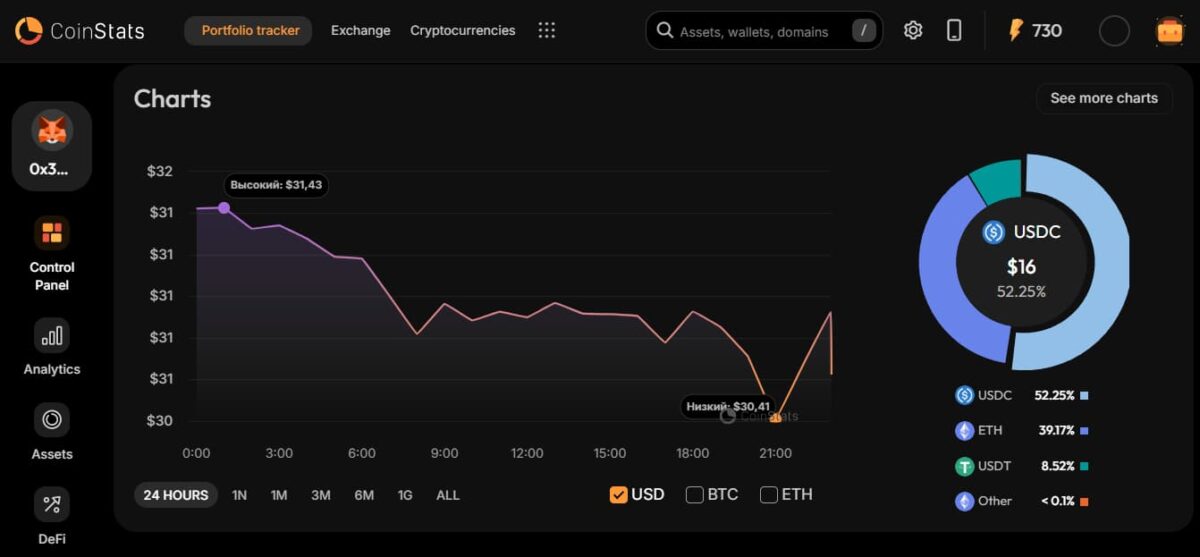
For investors who have outgrown lightweight trackers but aren’t quite ready for institutional-grade dashboards, CoinStats provides an ideal middle ground. The app aggregates data from over 500 exchanges and wallets, syncing balances in real time. It automatically categorizes assets by source, displaying total value and portfolio distribution through clear, color-coded charts.
This multi-source solution eliminates one of the most common frustrations among beginners — fragmented data. Instead of juggling multiple platforms, users can open one dashboard and instantly view their total net worth, profits, and losses across all connected accounts.
The app also includes staking visibility, allowing users to monitor rewards from within the same interface — a small but helpful feature that simplifies participation in DeFi.
Pros: extensive integrations, alerts, and mobile synchronization
CoinStats’ automation features are among its biggest advantages. It supports direct connections with major wallets such as MetaMask and hardware devices, as well as numerous exchange APIs. Portfolio updates occur automatically, minimizing the risk of missing transactions or displaying outdated data.
Another standout is the alert system. Users can set personalized notifications for price changes, balance fluctuations, or performance goals. These alerts are particularly convenient for those who prefer passive monitoring without constantly checking the app.
The mobile version mirrors the web dashboard effectively. Synchronization across devices is seamless — any change made on desktop updates instantly on mobile, preserving layout and user preferences.
| Feature | Strength | Use Case |
| Integrations | Supports 500+ exchanges and wallets | Ideal for users with diverse portfolios |
| Alerts | Price and portfolio notifications | Active traders and swing investors |
| Cross-device sync | Seamless between web and mobile | Continuous monitoring on the go |
Cons: paid features and data lag in free plans
Although CoinStats’ free version offers most essential features, its most advanced tools — like historical analytics, in-depth performance graphs, and unlimited API connections — are locked behind a subscription paywall. This tiered pricing model can frustrate users who start on the free version and later discover that certain features stop midway through their use.
Another drawback is occasional data lag in the free plan. Some users have reported brief syncing delays when connecting with slower exchanges, meaning balance updates can trail by a few minutes. While this isn’t a major issue for casual holders, it can be inconvenient for active traders who rely on up-to-the-minute precision.
Lastly, as the platform has grown, so has its interface complexity. The increasing number of menus and subcategories can feel cluttered, making navigation confusing for first-time users until they become familiar with the layout.
CoinStats remains one of the most flexible and powerful portfolio trackers available, especially for those who value strong integration support and reliable mobile performance. However, due to its learning curve and pricing structure, it’s best suited for investors already comfortable navigating moderately complex tools.
4. CoinTracker
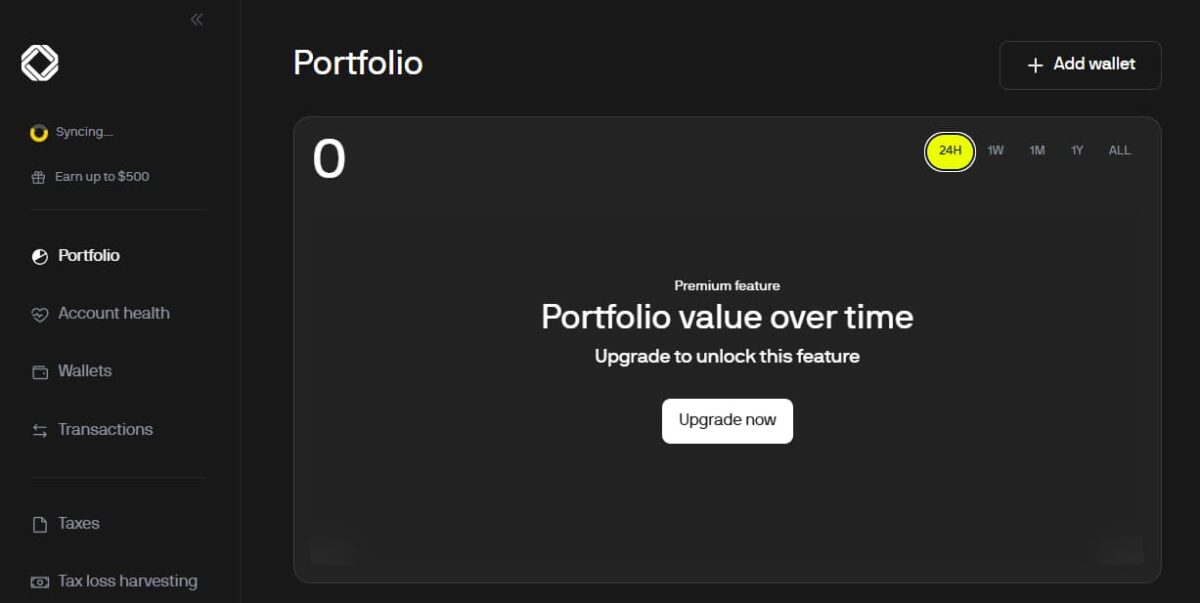
CoinTracker is almost synonymous with crypto taxation and cost-basis accuracy. Its biggest strength lies in connecting portfolio management with tax preparation, offering users a single platform to monitor performance while getting ready for annual reports. While the interface is clean and professional, the app focuses on accounting-level precision rather than visual simplicity, which can make it feel technical for beginners.
Precision in cost basis and tax reports
CoinTracker’s strongest feature is its powerful calculation engine. Using highly accurate tracking methods, it calculates cost basis across thousands of transactions, automatically distinguishing between realized and unrealized gains. Each asset’s activity — including buys, sells, swaps, and transfers — is logged in chronological order, ensuring that every cent of gain or loss is recorded correctly.
This level of precision prevents common beginner mistakes such as missing fees, double-counting transactions, or confusing assets from multiple exchanges. Since CoinTracker integrates directly with both centralized exchanges (CEX) and DeFi protocols, it automatically reconciles transfers, eliminating “phantom” profits or missing entries in reports.
The tax-reporting feature adds significant value. Users can generate ready-to-file summaries for the IRS or local compliance systems, reducing both workload and stress during tax season. For crypto holders in countries with strict reporting rules, this automation is a major advantage.
Pros: reliable PnL structure and tax-friendly design
CoinTracker’s analytics go much deeper than most retail tracking tools. Its dashboard doesn’t just show ROI and PnL but also breaks down results by asset class, time period, and transaction type.
This clarity helps investors identify which trades actually contribute to profits and which ones hurt overall performance. The app’s clean charts visually connect entry prices, market trends, and realized results — giving users better insight into their trading habits over time.
| Feature | Benefit | Ideal User |
| Cost-basis tracking | Tracks realized and unrealized gains with precision | Investors managing multiple exchanges |
| Tax-ready summaries | Exports directly to IRS and other authorities | Users needing compliance automation |
| Deep PnL analytics | Clearly separates profit drivers | Intermediate to advanced investors |
Cons: high subscription cost and steep learning curve
CoinTracker’s accuracy comes at a price. Its most advanced capabilities — such as full API automation, unlimited transactions, and tax export features — are reserved for premium subscribers. The free version works fine for simple portfolios but lacks historical depth and certain integrations.
Another challenge is the learning curve. For users accustomed to simple trackers, CoinTracker’s interface and terminology can feel intimidating. It leans heavily toward accounting language — terms like “cost basis,” “FIFO,” and “capital gains” — instead of the friendly, consumer-style phrasing found in lighter apps. Though the data presentation is clear, it requires patience to master.
Finally, synchronization speed can vary depending on the number of connected exchanges. Large or complex portfolios might take several minutes to refresh completely, which may frustrate traders seeking instant updates.
Despite these drawbacks, CoinTracker remains a top choice among detail-oriented investors and professionals who prioritize accuracy and compliance. It’s not the flashiest platform, but for users who value reliable PnL tracking and precise tax reporting, few tools come close.
5. Zapper
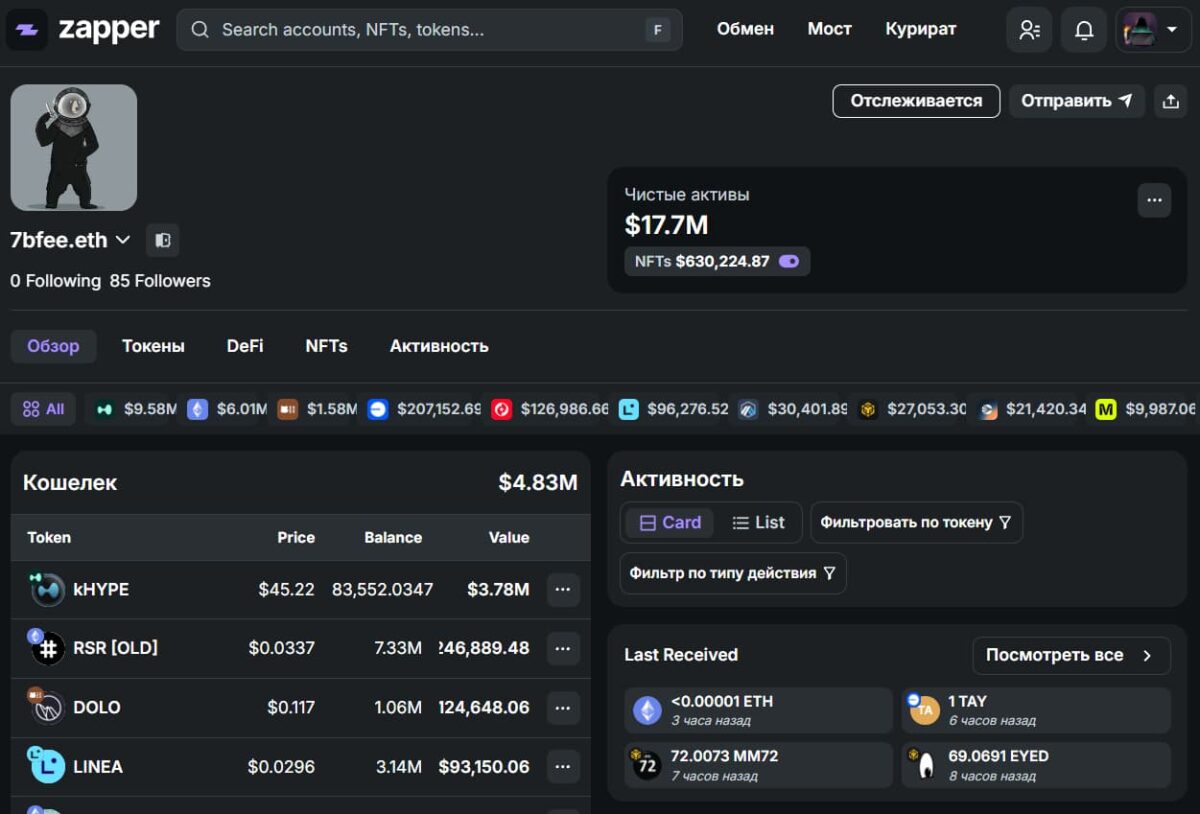
Zapper rose to popularity during the DeFi boom by offering something traditional trackers couldn’t — a wallet-centered, chain-agnostic perspective of crypto holdings. Instead of relying on exchange APIs, it reads data directly from blockchain addresses, displaying every token, liquidity pool, and NFT in real time. In 2025, it remains one of the most visually dynamic tools for crypto enthusiasts, though its limited centralized exchange (CEX) support keeps it from being a full-fledged portfolio manager.
DeFi-first interface for wallet monitoring
Unlike exchange-based trackers, Zapper is built entirely around the on-chain experience. Users simply connect their wallets — such as MetaMask, Ledger, or WalletConnect-compatible addresses — and the app automatically populates the entire portfolio. It displays balances, liquidity positions, staked assets, and NFTs across major networks like Ethereum, Polygon, and Arbitrum.
This approach removes the hassle of manual data entry. Zapper’s automatic detection is invaluable for DeFi users who frequently move assets between chains or protocols. The platform continuously scans wallet transactions and updates balances with block-level precision, saving traders hours of maintenance every month.
Another highlight is its strong visual design. Zapper’s dashboard feels modern, interactive, and data-rich without being overwhelming. It transforms DeFi tracking into an intuitive experience — something traditional, spreadsheet-style dashboards rarely achieve.
| Strength | Description |
| Wallet-based tracking | Reads data directly from blockchain nodes |
| DeFi visibility | Includes liquidity pools, staking, and NFTs |
| Interface design | Sleek visuals and seamless navigation |
Pros: multi-chain visualization and NFT support
Zapper doesn’t just list balances — it puts them in context. Each network’s assets are visually grouped so users can instantly see their exposure by chain and protocol. For instance, ETH liquidity positions in Uniswap appear alongside staked tokens in Aave or NFTs in the same wallet.
Including NFTs and DeFi positions gives Zapper an advantage for modern investors whose portfolios go beyond standard tokens. Few other tools provide such a clean, consolidated view of on-chain assets.
The app’s mobile performance is another major plus. It loads quickly, adapts intelligently to different screen sizes, and keeps data live during navigation. For crypto-native users, this mix of speed and visual depth makes Zapper feel like a natural extension of their wallets.
Cons: limited centralized exchange tracking
Zapper’s biggest shortcoming is intentional — it doesn’t support centralized exchanges. Users who also trade on Binance, Coinbase, or Kraken will find that portion of their portfolio missing unless entered manually. This limitation makes total ROI and PnL tracking incomplete.
Since it doesn’t connect via exchange APIs, Zapper also lacks cost-basis reconciliation between on-chain and off-chain assets. Users can clearly see their DeFi value, but total net worth and tax calculations may lose precision.
Additionally, while its DeFi coverage is excellent, newer or smaller chains can lag behind in integration. Some Layer 2 or niche ecosystems still require manual input.
| Limitation | Impact |
| No CEX integration | Incomplete portfolio totals |
| Limited cost-basis tracking | Less accurate ROI/PnL results |
| Partial chain coverage | Slower adoption of emerging networks |
Zapper stands out as a DeFi-native portfolio tracker — visually impressive, technically precise on-chain, but less comprehensive overall. It’s best used alongside a more complete tracker, making it ideal for users who treat decentralized assets as a primary focus rather than their entire investment portfolio.
6. Coin Market Manager
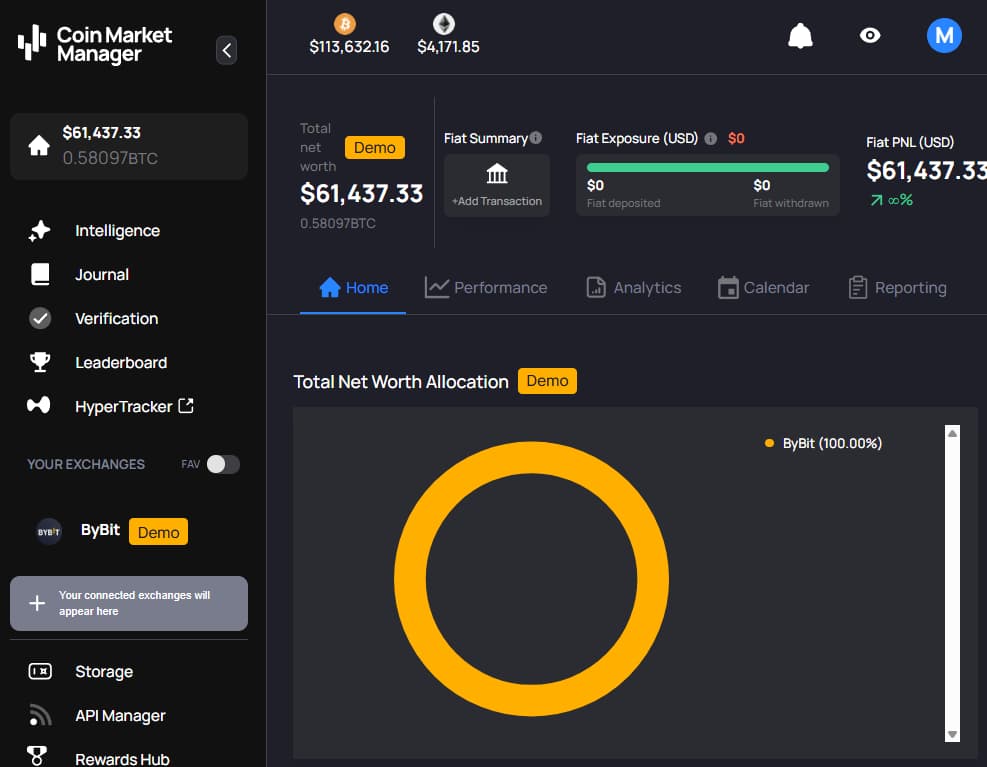
Coin Market Manager, or CMM, is designed for traders who want detailed trade analytics and journaling instead of simple portfolio summaries. It bridges the gap between performance tracking and behavioral analysis — allowing users to understand why specific trades succeeded or failed. Though it takes a more specialized direction than general portfolio trackers, it remains a valuable tool for traders who view their craft as a discipline.
Portfolio journaling and trade metrics
The app’s biggest advantage lies in its journaling engine. By connecting directly to exchange APIs, Coin Market Manager automatically imports all executed trades and arranges them in chronological order, highlighting entry prices, exit points, profit ratios, and fees. This timeline-style layout allows users to easily review trading strategies and identify patterns that might otherwise go unnoticed.
Each trade receives its own performance summary, including:
- Type of setup (long/short or spot purchase)
- Entry and exit reasons (optional manual notes)
- Profit margin and ROI per position
- Trade duration and average price movement
This level of detail appeals to active traders who want to improve their strategy using actual data rather than instinct. Over time, this data builds into a performance database, highlighting consistent strengths and recurring mistakes.
| Key Metric | Purpose |
| ROI per trade | Measures efficiency of individual trades |
| Win rate | Shows consistency across sessions |
| Average profit/loss | Helps detect overtrading habits |
| Fee impact | Quantifies the cost of trade execution |
Pros: ideal for understanding trading psychology
CMM isn’t just about numbers — it’s also about behavior. The ability to annotate trades gives users a reflection tool to analyze emotional habits, such as holding positions too long or closing too early. By turning trading into measurable data, Coin Market Manager encourages discipline and continuous improvement over impulsive decisions.
The dashboard supports multiple exchanges and allows side-by-side comparisons across different strategies. Swing traders, scalpers, and long-term investors can all examine performance clusters and adapt accordingly.
Another underrated strength is API precision. The app captures every trade detail, including partial fills and layered entries, avoiding the discrepancies common in lighter tracking tools.
Cons: narrow focus and dated interface
While invaluable for serious traders, Coin Market Manager is too specialized for casual investors. It doesn’t include DeFi, staking, or NFT aggregation, and its overall portfolio overview is limited to exchange-based assets. Those who prefer passive investing or yield farming will find its scope restrictive.
The user interface also feels dated. Compared to newer tools, CMM’s design prioritizes functionality over aesthetics — it’s dropdown-heavy, dense with data, and lacks visual polish. On smaller screens, particularly mobile, navigation can feel cramped.
Finally, automation beyond tracking is limited. Users must interpret insights manually since the platform doesn’t yet offer predictive analysis or AI-based recommendations.
| Strength | Limitation |
| Deep trade analytics | No DeFi or NFT support |
| Accurate API syncing | Outdated interface |
| Behavior tracking | No predictive automation |
Coin Market Manager is ideal for self-reflective traders who prioritize precision and psychological insight over convenience. It’s a niche but respected solution in 2025 — best used alongside broader portfolio dashboards that manage assets beyond centralized exchanges.
7. Lukka

Lukka holds a distinctive position in the crypto portfolio landscape — it’s not so much a consumer-level tracker as it is a compliance and data integrity powerhouse. Originally built for accounting firms and institutional clients, it has gradually expanded to serve advanced retail users who seek institutional-grade precision. Its greatest strengths lie in audit-ready data accuracy and regulatory compliance, though its pricing and complexity make it far from beginner-friendly.
Institutional-level accuracy and compliance tools
Unlike typical portfolio trackers, Lukka’s primary mission is to produce verifiable, regulation-grade data. Each transaction is processed through its proprietary normalization system, which standardizes variations in pricing, timestamps, and formatting across multiple exchanges and blockchains. The result is a unified dataset that can withstand professional audits — a rare feature in the crypto analytics world.
For businesses, this ensures that every ROI or PnL calculation connects to verifiable records, meeting standards like GAAP or IFRS. For individuals, it offers complete confidence that every figure is accurate, even when spanning hundreds of wallets and trading platforms.
Lukka’s compliance layer also simplifies tax and financial reporting. Users can export data directly into accounting software, create audit trails, and share verified transaction records with auditors or regulators. This makes it one of the few platforms trusted by both financial institutions and crypto-native enterprises.
| Feature | Advantage | Target Audience |
| Data normalization engine | Converts inconsistent data into audit-grade format | Institutions, accountants |
| Compliance exports | Ready for GAAP, IFRS, and IRS reporting | Professional users |
| Blockchain coverage | Multi-chain with historical accuracy | Advanced investors |
Pros: unmatched reliability in data audits
Lukka’s precision makes it indispensable for users who require flawless accuracy. Every imported dataset is validated before appearing on dashboards, ensuring duplicates, rounding errors, and timestamp mismatches are eliminated.
The system also supports multi-entity management, allowing firms and family offices to oversee multiple portfolios under one account. Custom roles, permissions, and access logs enhance its enterprise-grade security — a major step above consumer apps that prioritize convenience over accountability.
For accountants and fund managers, Lukka’s ability to consolidate thousands of transactions into audit-compliant records is invaluable. It transforms disorganized crypto activity into structured reports that align seamlessly with traditional financial systems.
Cons: inaccessible for retail users due to price and complexity
Although available to individuals, Lukka’s design and pricing primarily serve organizations. Setup requires knowledge of financial reporting principles, and the dashboard assumes familiarity with tax categorization and accounting frameworks.
Retail users often find the platform overwhelming. Instead of quick ROI charts or balance summaries, Lukka offers detailed ledgers, reconciliations, and journal entries — built for verification, not casual tracking.
Pricing is another major barrier. With enterprise plans costing thousands of dollars annually, Lukka appeals mostly to businesses that treat crypto tracking as part of their compliance infrastructure rather than a personal investment tool.
| Limitation | Impact |
| High pricing | Excludes most retail investors |
| Complex onboarding | Requires financial expertise |
| Minimal visual interface | Designed for accountants, not traders |
Lukka is about credibility, not convenience. It’s a robust solution for businesses and professionals managing large-scale digital portfolios under strict oversight. For everyday investors, however, its depth and cost can be excessive — a reminder that in crypto analytics, precision often comes at the expense of accessibility.
What the Comparison Reveals
After evaluating seven leading crypto portfolio tools in 2025, several clear patterns stand out. The wide range of approaches — from DeFi-focused dashboards to accounting-grade systems — shows how far the industry has matured. However, the comparison also highlights where user expectations still surpass what most platforms currently deliver.
Patterns among top performers: precision, automation, and trust
Across all platforms, three recurring themes define their evolution: precision, automation, and trust.
- Precision is now the minimum standard.
Users demand transaction-level accuracy for ROI and PnL across both centralized and decentralized platforms. Any tool that fails to synchronize historical data or calculate cost basis correctly quickly loses credibility. - Automation is no longer optional.
The best portfolio tools integrate APIs, real-time syncing, and automatic reconciliation, removing the manual work that used to frustrate investors. - Trust drives user loyalty.
Whether through transparent data sourcing or compliance guarantees, credibility has become a core differentiator. Even beginner-friendly tools must offer secure connections and auditable imports to build confidence.
In short, the “good enough” phase of crypto tracking is over. Every major tool now tries to balance these three pillars — though few manage to perfect all of them.
| Core Attribute | Why It Matters | Who Excels |
| Precision | Prevents inaccurate ROI or PnL calculations | Institutional tools (Lukka, CoinTracking) |
| Automation | Saves time, reduces manual effort | 3Commas, CoinStats |
| Trust | Builds long-term user confidence | CoinDataFlow, Copper |
Why user experience still defines adoption
Even as accuracy and automation improve, usability remains the strongest factor in long-term adoption. Investors may appreciate deep analytics, but no one wants to struggle with cluttered menus or laggy dashboards during volatile markets.
Platforms like CoinStats and Zapper attract users because they simplify complex information without sacrificing clarity. Conversely, tools that overload users with data or lock essential insights behind paywalls quickly lose engagement.
The takeaway from 2025 is clear — crypto tools must stay intuitive even when offering advanced analytics.
User retention data supports this: trackers with clear interfaces and strong mobile performance maintain 30–40% higher active usage than those focused purely on technical metrics. Accessibility is just as vital as precision.
“Even professional traders prefer clarity over clutter. The interface that makes data actionable always wins.” — Analyst comment, 2025
How balancing accessibility and professional analytics matters most
The biggest divide among platforms lies between retail-friendly and institutional-grade services.
Lukka and Copper dominate in compliance and audit readiness but remain inaccessible to everyday investors. On the other hand, tools like DropsTab or Zapper prioritize simplicity but sacrifice advanced data and tax functionality.
In between, a new wave of hybrid dashboards is emerging — tools that merge analytical depth with clean, intuitive design. These demonstrate that the best portfolio tracker isn’t the most feature-heavy, but the one that helps users understand their data effortlessly.
| Category | Example Platforms | Key Advantage | Key Limitation |
| Retail trackers | CoinMarketCap, DropsTab | Free access, ease of use | Limited analytics depth |
| Trader tools | 3Commas, Coin Market Manager | Real-time insights and trade data | Complexity, higher cost |
| Institutional systems | Lukka, Copper | Compliance-grade precision | Restricted accessibility |
In essence, 2025’s crypto tracking market doesn’t suffer from a lack of tools — it suffers from a lack of balance. The best-performing solutions succeed by understanding their users’ needs rather than trying to be everything for everyone.
FAQ: Common Questions About Crypto Portfolio Management
Crypto portfolio tracking continues to raise many recurring questions, especially for new investors choosing their first tool. Below are answers to the most common queries in 2025 — offering a mix of quick insights and deeper explanations that explore the trade-offs between convenience, accuracy, and security.
Which crypto portfolio service gives the most accurate ROI/PnL in 2025?
Accuracy depends on two core factors: how well the app synchronizes data across exchanges and how it calculates cost basis.
Platforms that reconcile timestamps and fees — such as professional-grade trackers and some hybrid dashboards — consistently outperform those relying only on exchange-reported numbers.
Free trackers often round or skip small entries, leading to incorrect cumulative profit figures. Advanced tools solve this by validating every transaction before generating ROI or PnL results.
If you trade across several exchanges or use both DeFi and centralized accounts, choose a tracker that supports full historical imports and error reconciliation.
How safe is it to connect exchanges and wallets?
Security differs by platform. Non-custodial trackers — where API keys never leave your device or are encrypted locally — provide the safest setup.
Cloud-based apps must ensure end-to-end encryption, both in transit and at rest, along with optional two-factor authentication or biometric login.
Most 2025 trackers follow these standards, but investors should always verify:
- Read-only API permissions (no withdrawal rights)
- Transparent encryption policies
- Documented security audits
Ultimately, protection depends as much on user behavior as on the platform itself — rotating keys and avoiding shared devices remain essential practices.
Are free tools reliable for active investors?
Free trackers work fine for small portfolios but often lose accuracy as complexity increases. Manual entry and slower API refresh rates can cause outdated or missing balances. For passive investors, that may be acceptable — but active traders need faster, verified data.
Most professional trackers now use a freemium model: free for basic use, paid for deeper analytics, multi-exchange syncing, and live alerts.
Paying for accuracy typically saves time and reduces the chance of tax or reporting mistakes later on.
Which platforms combine tax tools with real-time analytics?
A number of hybrid platforms now provide both performance tracking and tax-ready exports. They merge live market data with compliance-level reconciliation.
Typical workflow includes:
- Real-time ROI/PnL updates for continuous insight
- Automatic tagging of taxable events (sales, swaps, staking rewards)
- Export-ready reports for accounting or filing software
This setup has become standard for professional traders and high-volume investors in 2025.
Do institutional dashboards make sense for individuals?
Usually not. Institutional dashboards focus on compliance, risk control, and managing multiple clients — features that most retail investors don’t need.
While these systems deliver unmatched precision, the steep learning curve and high subscription costs put them out of reach for casual users.
However, professionals managing both business and personal assets sometimes adopt them to maintain unified audit records, especially across international tax jurisdictions.
What defines the true “leader” among trackers this year?
The best portfolio tracker in 2025 isn’t necessarily the one packed with the most features — it’s the one that balances clarity, consistency, and trust.
Investors favor platforms that show real ROI, sync data reliably, and are transparent about how they handle information.
Key strengths of leading tools include:
- Accurate, multi-source ROI/PnL calculations
- Clean, user-friendly dashboards for both desktop and mobile
- Non-custodial data protection
- Clear pricing and transparent usage limits
In a crowded market, the winning tools are those that help users make confident, informed decisions without requiring constant oversight.
Final Reflections: How Beginners Can Sidestep Common Traps
Managing a crypto portfolio in 2025 is both easier and more challenging than ever. While automation and integrations have eliminated much of the chaos of manual tracking, the overwhelming number of options can easily confuse newcomers into hesitation or poor choices.
Consistency isn’t about using the most advanced tool — it’s about finding the system that fits your real trading habits.
Here are practical lessons every new investor should apply:
- Start simple, then scale.
Don’t jump into enterprise-level platforms before understanding your own trading rhythm. Begin with intuitive dashboards like CoinDataFlow or DropsTab to establish consistent habits. - Choose automation over perfection.
Even basic auto-syncing removes most rookie mistakes. A tool that updates automatically is far more valuable than one overloaded with manual customization options. - Know your ROI correctly.
Learn the difference between balance fluctuations and realized gains. Misinterpreting PnL remains one of the most common beginner errors. - Back up and verify regularly.
Always confirm that imported data matches your exchange records. Even the best APIs can miss a transaction or two. - Never neglect security.
Whenever possible, connect wallets and exchanges using read-only permissions. Avoid granting trading or withdrawal access unless absolutely necessary. - Keep taxes in mind all year.
Waiting until tax season to rebuild your crypto history is a nightmare. Tools like CoinTracker or Lukka make compliance much easier when used consistently. - Don’t overcomplicate your setup.
A few reliable tools will always outperform a chaotic mix of dashboards. Simplicity leads to consistency.
Ultimately, mastering portfolio management is more about awareness and discipline than technology. The tools already exist — the difference lies in the investor’s mindset.
As the crypto industry matures, the long-term winners will be those who treat data as an ally, not an afterthought.
Recent Comments